










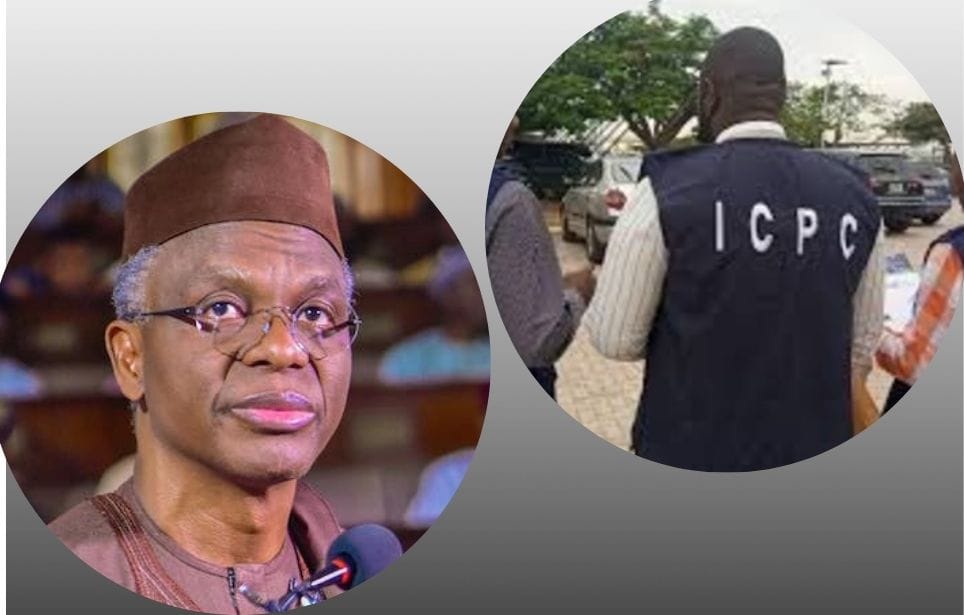
Former Kaduna State governor, Nasir El-Rufai, has been released from ICPC detention on compassionate grounds following the death of his mother, Hajiya Umma El-Rufai, sources have confirmed.
The Independent Corrupt Practices and Other Related Offences Commission (ICPC) granted the temporary release to allow El-Rufai to attend the burial rites of his late mother in Egypt, where she had been receiving medical treatment before her passing.
According to insiders, the anti-graft agency approved the release specifically so the former governor could participate in the funeral ceremonies.
El-Rufai had been in ICPC custody since February 19, 2026, after being taken over from the Economic and Financial Crimes Commission (EFCC). Earlier in the week, he was arraigned before a Federal High Court in Kaduna alongside his former aide, Joel Adoga, facing charges of alleged money laundering, fraud, and abuse of office. Both defendants pleaded not guilty, and the hearing for El-Rufai’s bail application was adjourned to March 31, 2026.
El-Rufai Spent Detention Fasting, Studying Quran, Reading Books – Associate Reveals
The release has sparked debate, with human rights lawyer Inibehe Effiong questioning the legality of freeing a detainee remanded by a court.
“A person who is remanded by an order of a court cannot be released legally without recourse to the court,” Effiong wrote on 𝕏.
“ICPC, can you clarify the procedure adopted in this case? El-Rufai’s motion for bail is slated for Tuesday, March 31, 2026. How was his release processed?”
He even referenced the legendary singer Fela, noting:
“Is this another government magic that the legendary Fela sang about?”
🔥 WheytindeyBlog Takeaway:
While El-Rufai’s release was on compassionate grounds, the move raises legal questions about ICPC procedures. For many Nigerians, this case underscores the delicate balance between human compassion and the rule of law in high-profile investigations