








Nigeria has secured a major international development and investment partnership with Germany following the signing of a €65 million development cooperation agreement alongside a €300 million export credit facility aimed at supporting critical sectors of the Nigerian economy.
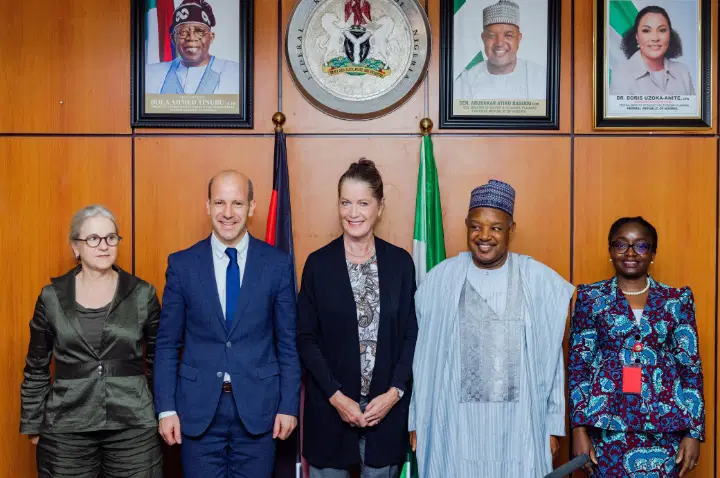
The agreement was reached during bilateral negotiations held in Abuja between Germany’s Federal Ministry of Economic Cooperation and Development (BMZ) and Nigeria’s Ministry of Budget and Economic Planning.
The partnership is expected to strengthen private sector investment, support renewable energy expansion, improve access to financing for businesses, and deepen economic cooperation between both countries.
At a time when Nigeria continues pushing major economic reforms, the deal signals increasing international confidence in the country’s long-term economic direction.
By Wheytindey Media
Credit: Progress Godfrey
Main Details
What the Nigeria-Germany Deal Involves
The agreement contains two major financial components:
1. €65 Million Development Cooperation Support
This portion focuses on:
- Small business financing
- Renewable energy projects
- Women-led enterprises
- Youth development initiatives
- Governance support
- Agricultural value chains
According to German officials, the funding is structured as concessional financing aimed at supporting sustainable economic growth and empowering private businesses.
2. €300 Million Export Credit Facility
The larger €300 million facility is designed to:
- Reduce investment risks
- Support public and private sector projects
- Encourage German-Nigerian business partnerships
- Ease financing costs for strategic investments
The facility particularly targets sectors such as:
- Power transmission
- Infrastructure
- Manufacturing
- Agribusiness
- Technology
German Commissioner for Africa and Director of the Africa Directorate at BMZ, Philipp Knill, explained that the financing model is meant to attract more private capital into Nigeria’s economy.
Germany’s Focus on Energy and Infrastructure
Why the Power Sector Matters
One of the biggest highlights of the partnership is energy development.
Germany revealed that collaboration under Nigeria’s Presidential Power Initiative is expected to help scale transmission capacity significantly while improving electricity access nationwide.
Reliable electricity remains one of Nigeria’s biggest economic challenges.
For decades:
- Businesses have struggled with high energy costs
- Manufacturers rely heavily on generators
- Small businesses lose revenue from power instability
- Investors often cite electricity concerns as a major risk
Improving transmission infrastructure could therefore have a major economic impact.
According to German officials, the export credit facility will help lower financing risks for companies investing in Nigeria’s power sector.
This approach is important because many international investors often avoid emerging markets due to fears around:
- Currency volatility
- Infrastructure risks
- Financing uncertainty
- Regulatory instability
Germany’s support could help reduce some of those concerns.
Agriculture and Digital Development Also Included
Focus on Agribusiness Value Chains
The partnership also includes support for:
- Cashew production
- Tomato processing
- Potato farming
- Agricultural value chains
Agriculture remains one of Nigeria’s largest employers despite ongoing productivity challenges.
Supporting value chains is particularly important because Nigeria has historically struggled more with processing and storage than actual production.
Large quantities of agricultural produce are lost yearly because of:
- Poor storage systems
- Weak logistics
- Inadequate processing facilities
- Limited financing
If managed properly, investments in these areas could improve food security while creating employment opportunities.
Youth Skills and Digital Solutions
Another key area mentioned during negotiations was youth development and digital innovation.
Germany plans to strengthen partnerships involving:
- Technical training
- Digital solutions
- Skills development programmes
- Collaboration with German firms
This is highly relevant considering Nigeria’s youthful population and rising unemployment levels.
Digital technology and vocational development are increasingly becoming major pathways for economic growth globally.
Nigeria’s Economic Reform Agenda
Government Says Reforms Are Expanding Opportunities
Nigeria’s Minister of Budget and Economic Planning, Abubakar Atiku Bagudu, stated that recent economic reforms are creating more opportunities for investment.
According to him, reforms include:
- Foreign exchange liberalisation
- Improved domestic revenue mobilisation
- Strategic investment priorities
- Increased fiscal space for states
Bagudu also explained that state governments are now better positioned to attract private investments directly.
This is significant because sub-national development has become increasingly important in Nigeria’s economic structure.
Many states are now competing more aggressively for:
- Infrastructure projects
- Manufacturing investments
- Agricultural partnerships
- Technology investments
Background & Historical Context
Nigeria and Germany’s Longstanding Economic Relationship
Nigeria and Germany have maintained diplomatic and economic ties for decades.
Germany has traditionally been involved in:
- Technical cooperation
- Renewable energy support
- Vocational training
- Infrastructure partnerships
- Industrial collaboration
However, recent years have seen a shift toward more investment-driven partnerships rather than traditional aid-focused relationships.
This reflects a broader global trend where development cooperation increasingly focuses on:
- Private sector mobilisation
- Sustainable investment
- Technology transfer
- Economic resilience
Germany appears to be positioning Nigeria as a strategic economic partner within Africa due to:
- Nigeria’s population size
- Market potential
- Regional influence
- Growing digital economy
Public Reactions and Economic Opinions
The announcement generated mixed but largely optimistic reactions among Nigerians online.
Some economic observers praised the deal, saying:
- It could improve infrastructure financing
- It may support SMEs
- Renewable energy investments are urgently needed
- Germany’s confidence could attract other investors
Others, however, raised concerns regarding:
- Transparency
- Implementation efficiency
- Debt sustainability
- Whether ordinary Nigerians will feel the impact
Some critics also pointed out that Nigeria has signed several international agreements in the past with limited visible outcomes due to policy inconsistency and project delays.
These concerns reflect wider public skepticism around government implementation capacity.
Wheytindey Analysis & Commentary
Why This Deal Matters Beyond the Headlines
The most important aspect of this agreement is not merely the money itself.
It is what the deal represents.
International development financing today is no longer simply about aid. It is increasingly about strategic investment partnerships.
Germany’s decision to deepen economic cooperation with Nigeria suggests growing confidence in the country’s long-term market potential despite current economic challenges.
Another major point is the focus on “catalytic funding.”
That phrase is extremely important because it means the goal is not just government spending — it is about attracting larger private investments into Nigeria’s economy.
If implemented effectively, this could help:
- Expand industrial activity
- Improve infrastructure
- Support entrepreneurship
- Increase energy reliability
- Create jobs
However, implementation will determine everything.
Nigeria has often struggled not with agreements, but with execution.
The real test will be:
- Transparency
- Project delivery
- Accountability
- Long-term sustainability
Without proper implementation, even strong international partnerships can fail to produce visible results for citizens.
Energy Could Be the Biggest Winner
The power sector may ultimately become the most transformative part of this partnership.
Electricity problems affect nearly every sector in Nigeria:
- Manufacturing
- Healthcare
- Technology
- Education
- Small businesses
Improving transmission capacity could reduce operational costs for businesses while increasing productivity nationwide.
If Nigeria successfully strengthens energy infrastructure, the economic ripple effects could be massive.
Conclusion
The €65 million development cooperation agreement and €300 million export credit facility between Nigeria and Germany represent one of the latest major international investment partnerships aimed at supporting Nigeria’s economic reforms and private sector growth.
The deal covers critical sectors including:
- Energy
- Small business financing
- Agriculture
- Digital innovation
- Youth development
- Infrastructure
While the partnership has generated optimism, many Nigerians will ultimately judge its success based on implementation and visible economic impact.
Still, the agreement reflects growing international interest in Nigeria’s economic potential and highlights the increasing importance of private-sector-driven development partnerships in Africa’s largest economy.