










If you’ve ever wondered if your phone could help your body… scientists might be onto something.
A new study from the University of Chicago has found a way to use lithium, the same stuff in lithium-ion batteries that power your devices, to target pain in the body without hitting other organs.
💡 Why Lithium?
Lithium has been used in medicine for decades, mostly as a mood stabilizer. Researchers are now exploring it for pain relief, Alzheimer’s, and even nerve repair.
The problem? Taking lithium in pills spreads it everywhere in your body, putting stress on the kidneys and liver. Scientists wanted a way to deliver it only where it’s needed.
⚡ Batteries to the Rescue
Two UChicago labs teamed up to solve this. Prof. Bozhi Tian, an expert in biomedical devices, and Assoc. Prof. Chong Liu, a materials science researcher, turned to lithium batteries.
Why? Batteries already store lithium ions and release them on command perfect for precision medicine. They focused on lithium iron phosphate, a stable, non-toxic battery material.

🩹 How the Patch Works
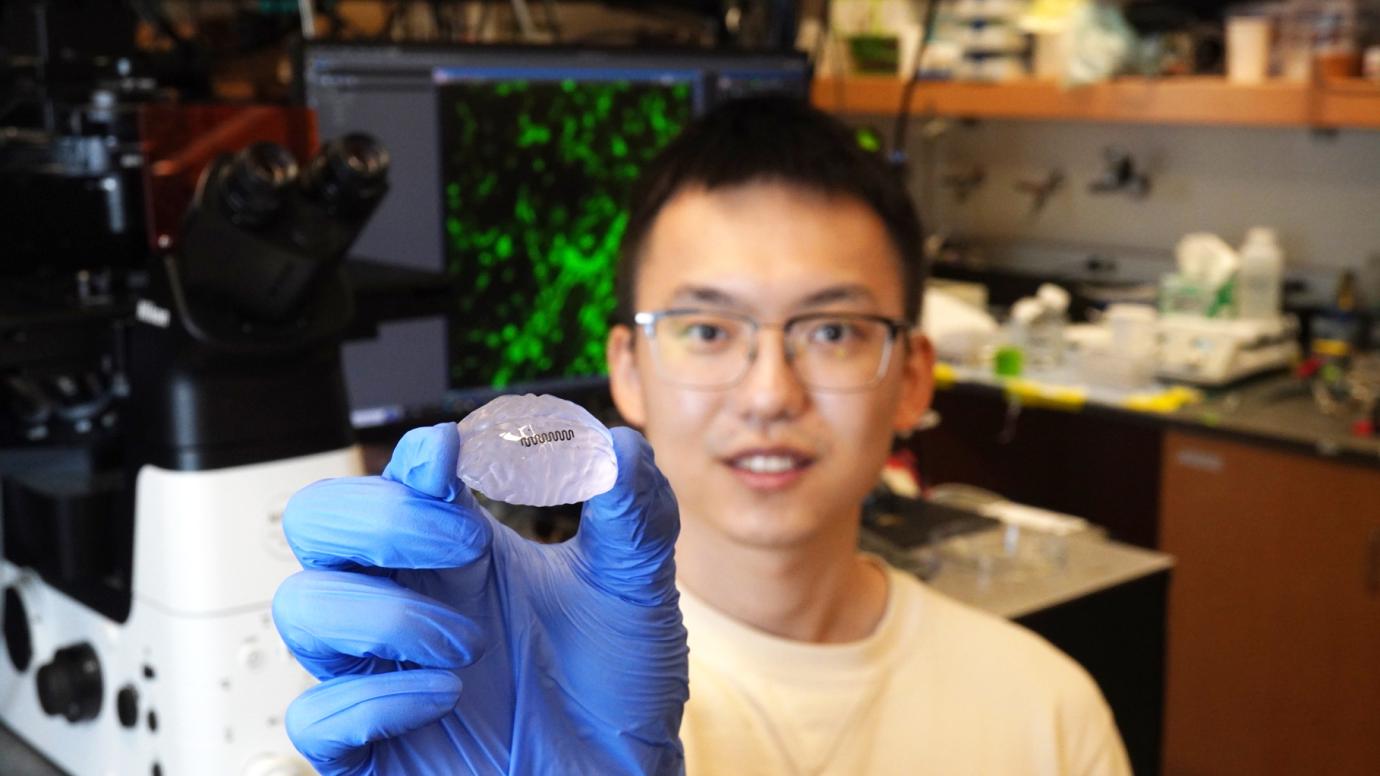
Graduate student Zhe Cheng created a tiny, flexible patch made from lithium iron phosphate. The idea: place the patch near a nerve, send a small electric signal, and release lithium ions right where the pain is.
In tests with mice and rats, the patch dampened nerve activity effectively, without spreading lithium to other parts of the body.
“The lithium doesn’t migrate far from the patch, while still delivering long-lasting nerve inhibition,” said Cheng.
🌱 The Bigger Possibilities
The study is just a proof of concept, but the team sees huge potential:
- The technology could be combined with electrical acupuncture no implant needed.
- Other ions like magnesium, calcium, or zinc could be used for different health purposes. For example, magnesium could help treat diseases caused by misfolded proteins.
🧪 Who’s Behind the Innovation
The study included postdocs, grad students, and collaborators at UChicago, and made use of the university’s top-tier research facilities. Funding came from the U.S. Army Research Office, NIH, and NSF.
The study was published in Nature Materials under the title: “Mineral-originated bioelectronics for inhibition via lithium electrochemistry.”
🔥 Wheytindeyblog Take
Who would have thought that the same lithium powering your phone could one day power a new kind of medicine? This tech is proof that science keeps finding clever ways to turn everyday tech into life-saving solutions.