








Popular Islamic cleric, Ahmad Gumi, has publicly denied allegations linking him to statements supporting banditry in Nigeria, describing the viral videos and messages circulating online as manipulated, doctored, and intentionally misleading.
The controversial cleric made the clarification through a statement shared on his verified Facebook page amid growing criticism and renewed online debates surrounding insecurity in Northern Nigeria.
For years, Sheikh Gumi has remained one of the most talked-about religious figures in Nigeria due to his outspoken comments on insecurity, kidnapping, negotiations with armed groups, and government handling of violence in the North. However, his latest statement appears to be a direct response to mounting public pressure and social media narratives accusing him of indirectly defending bandits.
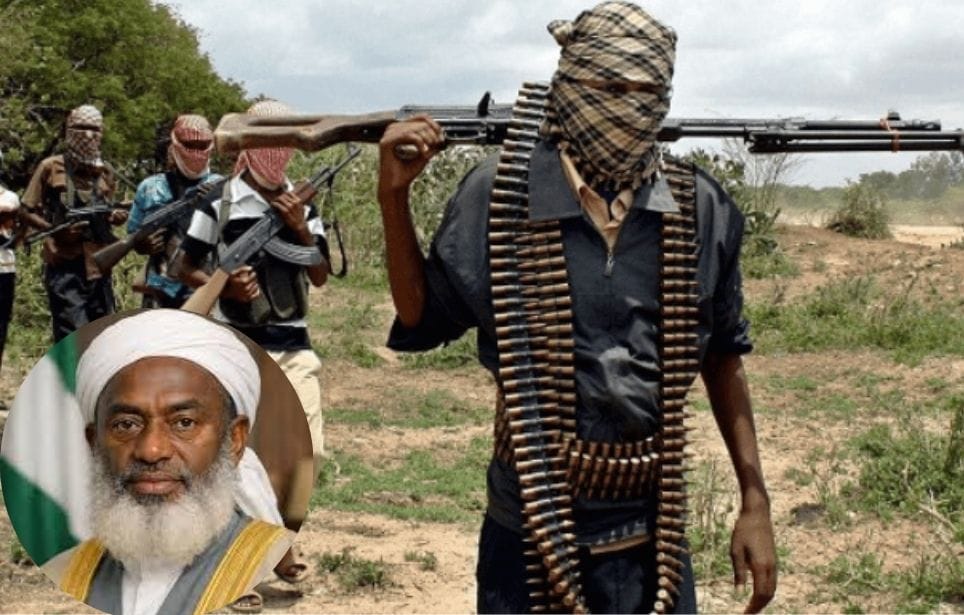
The issue has once again reopened conversations about misinformation, ethnic tensions, insecurity, media manipulation, and the dangerous influence of viral narratives in Nigeria’s already tense political atmosphere.
Main Details
In his statement, Sheikh Gumi firmly rejected claims suggesting he has ever supported criminal activities or encouraged banditry in any form.
According to him, several clips from old interviews and public engagements are currently being taken out of context and repackaged to create a false impression about his views.
He accused some individuals, ethnic-interest groups, and online content creators of deliberately twisting his words to attract attention and stir public outrage.
The cleric stated:
“I hereby state unequivocally that any video clip, written statement, or message attributed to me, whether directly or by innuendo, suggesting support for, justification of, protection of, or advocacy for banditry in Nigeria or anywhere else does not emanate from me.”
Gumi further urged Nigerians, media organisations, and security authorities to disregard what he described as fake and manipulated materials being circulated online.
He warned that those spreading false narratives about him may eventually face legal action if the misinformation campaign continues.
He added:
“I, therefore, urge the general public, the media, and the Nigerian state to disregard such fake, manipulated, and doctored materials currently in circulation.”
The cleric also expressed sympathy for victims of insecurity across the country and prayed for peace, unity, and long-term solutions to violence and social instability in Nigeria.

Background and Context
Sheikh Gumi’s name has frequently surfaced in conversations surrounding insecurity in Northern Nigeria over the past few years.
During the peak of bandit attacks and mass kidnappings across states like Kaduna, Zamfara, Niger, and Katsina, Gumi became known for visiting forests and engaging directly with armed groups in attempts to negotiate peace and encourage dialogue.
While some people viewed his approach as an attempt to reduce violence through negotiation, critics accused him of appearing too sympathetic toward criminal groups.
At different times, clips from his interviews sparked outrage online, especially when he spoke about the social conditions, poverty, and marginalisation fueling insecurity in parts of Northern Nigeria. Many Nigerians believed his comments sounded more like excuses for banditry, while supporters argued that he was only highlighting root causes of violence rather than defending criminals.
This misunderstanding has followed him for years.
Nigeria’s insecurity crisis itself remains deeply complicated. Beyond military operations, analysts have linked the rise of banditry to poverty, weak governance, unemployment, illegal arms proliferation, political instability, and lack of state presence in rural communities.
Because of this, conversations around insecurity in Nigeria often become emotionally charged, politically sensitive, and heavily divided along ethnic and regional lines.
The rise of social media has also worsened the situation, with edited clips, misleading headlines, and propaganda frequently shaping public opinion before facts are fully verified.

Public and Social Media Reactions
The statement from Sheikh Gumi has generated mixed reactions across social media platforms.
Some Nigerians defended the cleric, arguing that many public figures in Nigeria have become victims of manipulated videos and selective editing online.
Others insisted that regardless of his clarification, his past comments about negotiating with bandits contributed to public suspicion and mistrust.
Several users on X (formerly Twitter) argued that public figures must be extremely careful with their words, especially on sensitive national security matters.
Another group of Nigerians questioned why controversial clips linked to Gumi continue resurfacing years later, suggesting that the issue reflects deeper public frustration over insecurity and the government’s inability to fully tackle banditry.
Meanwhile, supporters of the cleric praised him for speaking out directly and attempting to clear the air before misinformation escalates further.
The reactions reveal how divided Nigerians remain whenever discussions around insecurity, ethnicity, religion, and politics intersect.
Wheytindey Insight and Analysis
What makes this issue important is not just Sheikh Gumi’s denial — it is what the controversy says about modern Nigeria’s information environment.
Today, public opinion is increasingly shaped by short clips, edited videos, emotional headlines, and viral narratives rather than complete context. In a country already struggling with insecurity and distrust, misinformation spreads faster because emotions are already high.
Whether people agree with Gumi or not, the situation highlights a dangerous reality: once a public figure becomes controversial, almost every statement they make can easily be reframed to fit existing public bias.
At the same time, critics also have legitimate reasons for skepticism. Over the years, many Nigerians felt uncomfortable with Gumi’s repeated emphasis on dialogue with armed groups, especially when thousands of innocent citizens were being kidnapped or killed.
This is why the cleric continues to face strong scrutiny even after issuing denials.
However, there is also a broader lesson here for the Nigerian media space. Sensationalism has become one of the biggest drivers of online engagement. Many blogs, influencers, and content creators prioritise clicks and outrage over context and responsible reporting.
The result is a deeply polarised society where facts become difficult to separate from propaganda.
Another major issue is that insecurity in Nigeria has now evolved beyond just a security challenge — it is also an information war. Narratives, perceptions, propaganda, and misinformation now influence how citizens view ethnic groups, religions, government institutions, and even victims themselves.
This makes responsible journalism and accurate reporting more important than ever.
Conclusion
Sheikh Ahmad Gumi’s latest statement denying support for banditry has once again reignited national conversations about insecurity, misinformation, and public trust in Nigeria.
While the cleric insists that the viral materials circulating online are fake and manipulated, the controversy reflects deeper tensions within a country still battling violence, division, and distrust.
As Nigerians continue searching for lasting solutions to insecurity, one thing remains clear: the fight against violence must also include the fight against misinformation, manipulation, and sensational narratives capable of inflaming an already fragile society.
Reporting and Analysis by Wheytindey Media

Dangote Refinery IPO Attracts Strong Investor Interest as ₦2.15 Trillion Offer Opens
The Dangote Petroleum Refinery and Petrochemicals Initial Public Offering (IPO) has attracted strong interest from Nigerian retail investors following the opening of the ₦2.15 trillion public offer. The IPO, which opened on September 14, 2026, offers 4.1 billion ordinary shares at ₦525 per share, with a minimum subscription of 10 shares, valued at ₦5,250. The…
2026 Headies Awards: FOLA, Omah Lay, Wizkid, Davido and Others Lead Nominations
The nominees for the 18th Headies Awards have been unveiled, with some of Africa’s biggest music stars set to compete for honours at this year’s ceremony. The 2026 edition, themed “Africa to the World,” is scheduled to take place in Toronto, Canada, on October 25, 2026. This year’s nomination list features established Afrobeats stars alongside…
Celebrity Boxing Match: Phyna vs. Nkechi Blessing Set to Clash in Lagos
A fresh celebrity showdown is set to take place in Lagos as reality TV star Phyna and Nollywood actress Nkechi Blessing Sunday prepare to settle their recent social media dispute inside the boxing ring. The two entertainers have been officially announced as opponents for a celebrity boxing bout tagged “Phyna vs Nkechi”, which forms part…